
Mortgage Automation & Digital Origination: What Modern Lenders Are Building in 2026
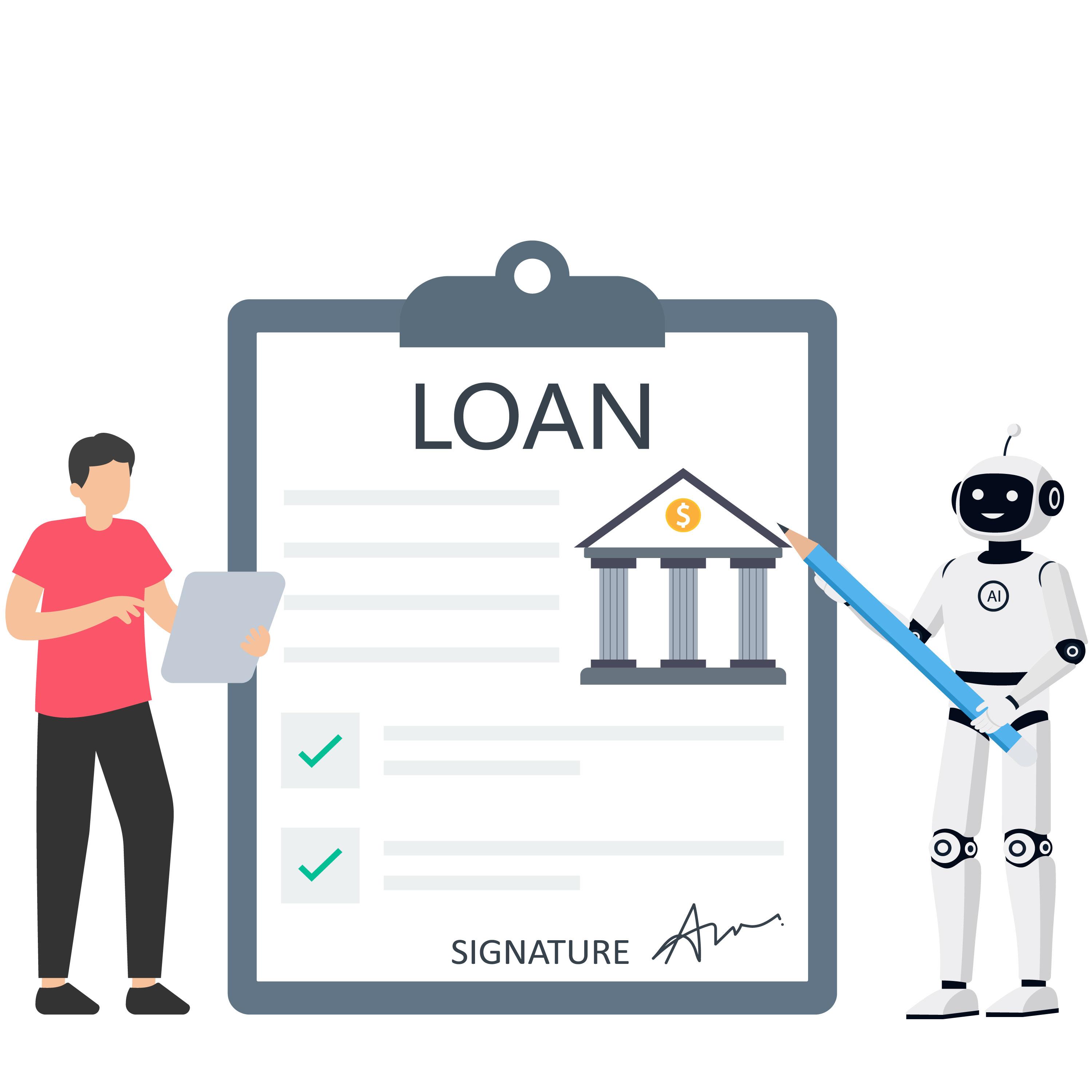
Mortgage automation has been the headline of the industry for five years. What modern lenders are actually building, in 2026, is more specific than "digital mortgage" and more cautious than the 2021 vintage of AI-everywhere pitches. The winners are building TRID-safe automation, AI that respects consumer protection rules, and platforms that were compliance-first from the start — because the cost of a disclosure error or a disparate-impact finding in an ML model is measured in regulator attention, not engineering cycles.
Here is what the shape of modern mortgage automation looks like from the builder's perspective, and where compliance-first engineering is an enabler rather than a drag.
The TRID-Safe Automation Boundary
TRID (the TILA-RESPA Integrated Disclosure rule) constrains what can be automated in the origination flow. Initial disclosures, changed circumstances, revised disclosures, and the three-day and seven-day windows are not negotiable — and the penalties for disclosure errors are commercial enough that lenders treat TRID compliance as a non-functional requirement that overrides automation ambitions.
Modern automation designs around TRID by encoding the disclosure engine as a first-class part of the platform. State machines model the application lifecycle; every state change is evaluated for TRID implications; revised disclosures are generated deterministically from the change set; timers enforce the waiting periods. The automation is fast inside the TRID boundary and respectful of it. That is the engineering shape.
AI-Assisted Origination: Drafting, Not Deciding
The useful role for LLMs in origination is drafting and assistance, not decision-making. AI advisors that guide borrowers through application questions, document checklists, and explanation of terms. Document intelligence that classifies incoming files, extracts key fields, and routes to the right pipeline. Assistant agents for loan officers that draft follow-up emails, summarize the state of the file, and surface missing items.
Where AI crosses into decision territory — credit decisioning, pricing, adverse action — the constraints are heavy: ECOA's fair lending posture applies, disparate impact analysis is required, and any model influencing a decision has to be explainable and documented. The pragmatic pattern is human-in-the-loop for any decision-adjacent output, with the AI adding speed and consistency to the human workflow rather than replacing the human review.
The Four Portals That Matter
A modern digital origination platform tends to settle around four portal experiences: borrower (the POS), loan officer / processor, underwriter, and (sometimes) real estate or third-party partner. Each portal has a different information design, a different interaction model, and a different compliance surface.
The borrower portal wants low friction, clear consent moments, and transparent status. The LO portal wants fast state capture, pipeline visibility, and strong integration with CRM and communication tools. The underwriter portal wants the whole file, the conditions, and the decision tools. The partner portal wants controlled access with audit trails.
Building all four well in parallel is a platform effort. Doing it with a two-person startup requires a pod that has already shipped this shape — which is the exact use case Engineering in a Box exists for.
Integrations: The Same Old List, More Critically
Credit bureaus (Experian, Equifax, TransUnion via direct or Trinity / CIC / Factual Data), GSE integrations (DU, LPA), appraisal management companies and AVMs, title and closing platforms, e-signature (DocuSign, Notarize), identity verification (Plaid, Alloy, Jumio), flood, income verification (The Work Number, Yodlee-based approaches), and the LOS of record. A digital mortgage platform without these integrations is a prototype.
The engineering effort is not trivial. Credit bureaus have their own rate-limiting and consent handling. GSE integrations have their own test harnesses and production promotion requirements. Every integration is a compliance artifact as well as a feature — the sub-processor list for a digital mortgage platform is long, and every vendor is a DPA conversation.
Compliance-First Platform Design
Compliance-first does not mean slow. It means the compliance primitives are built into the platform — not grafted on top of a feature-complete codebase later. Audit logging is a cross-cutting concern, not a feature. Consent and preference management is a first-class data model. Disclosure generation is a deterministic service, not a set of templates. Fair lending evidence is produced by the platform, not by quarterly spreadsheets.
The payoff is that the compliance review — with a state regulator, with an enterprise lender's procurement, with the CFPB during a supervisory exam — is answered with evidence that already exists. The alternative is manufacturing evidence in a deadline-driven scramble, and that is where startups in this space fail.
Mortgage CRM: The Quiet Back Half
Mortgage CRM is often treated as a secondary concern because it is less visible than the POS. In practice, the CRM is where loan officer productivity lives and where most of the retention math is decided. Modern mortgage CRM looks less like Salesforce customization and more like purpose-built workflow: contact-to-pipeline conversion, communication orchestration with TCPA-safe dial pacing, co-borrower and referral source management, and marketing automation that is respectful of state-specific solicitation rules.
A digital mortgage platform that does not have a credible CRM story will struggle to hold ground against incumbents whose salesforce automation is an unfair strength.
The Reslt AI Posture on Mortgage Automation
We have built across mortgage automation — AI advisors, identity verification, credit bureau integrations, lender marketplaces, and the disclosure plumbing that makes the rest defensible. The pattern is: compliance-first platform, TRID-safe automation boundaries, AI in drafting and assistance roles, human-in-the-loop at any decision surface, and integration depth with the LOS, GSE, and credit-bureau stack that lenders expect.
If you are building mortgage automation and aiming at modern lenders, the shortest path is to start compliance-first, design around the regulatory boundaries, and pick a partner who has shipped this exact shape before. That is how Engineering in a Box collapses the 24-month delivery story into a 12-month path to the first enterprise lender deal.
Talk to Reslt AI
If the path in this piece matches your next 12 months, the Reslt AI team can scope an Engineering in a Box pod around it. SOC 2 Type 2 validated by A-LIGN, a US Solution Architect on every engagement, and a delivery team that has shipped into regulated verticals before — from sprint one. Reach us at contact@reslt.ai or visit reslt.ai.